
Busy professionals often juggle meetings, deadlines, and endless to‑do lists, only to find themselves staring at the ceiling when the clock strikes ten. The good news? A deliberate self‑care mindset for better sleep can transform those restless nights into restorative slumber. Below is a step‑by‑step, SEO‑optimized guide that blends science, practical habits, and the right tools so you can finally fall asleep faster, stay asleep longer, and wake up refreshed.
Why Mindset Matters for Sleep
Sleep is not just a biological need; it is a psychological state shaped by the stories we tell ourselves before bedtime.
Science of sleep‑mindset connection
Neuroscience shows that the pre‑sleep brainwave pattern, known as alpha activity, is highly sensitive to mental chatter. When you consciously adopt a calming mindset, you encourage a shift from beta (alert) to alpha and theta waves, which primes the body for sleep.
Impact of stress and cortisol on sleep latency
Cortisol, the stress hormone, follows a diurnal rhythm that peaks in the morning and should dip at night. Chronic stress flattens this curve, keeping cortisol elevated after dark and lengthening sleep latency—the time it takes to drift off. Simple mindset shifts, such as gratitude journaling, can lower cortisol by up to 15% within weeks, according to peer‑reviewed studies.
Psychological cues that signal the brain it’s time to rest
Conditioned cues—like dim lighting, a specific scent, or a brief meditation—create a Pavlovian response. Over time, the brain learns to associate these cues with sleep, making the transition smoother.
Build a Sleep‑Friendly Environment
Even the most disciplined mindset stalls if the bedroom environment is hostile.
- Control light exposure: Install blue‑light filters on phones and computers at least two hours before bed. Blackout curtains or a sleep mask block external light that suppresses melatonin production.
- Optimize temperature and bedding: Aim for 65–68°F (18–20°C). Breathable sheets, a supportive mattress, and a lightweight blanket help maintain core body temperature without overheating.
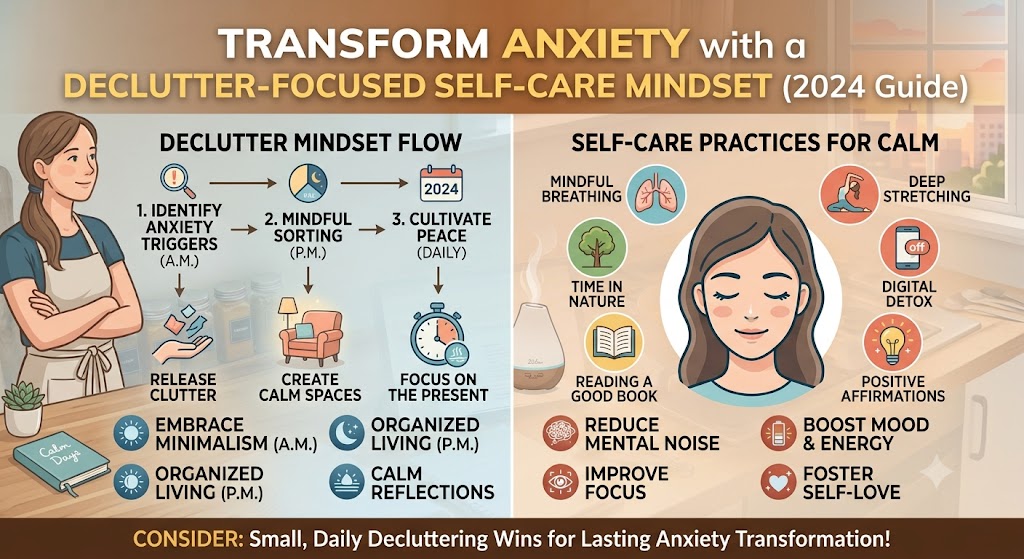
- Declutter the bedroom to reduce mental clutter: A tidy space lowers visual noise and signals that the room is for rest, not work. For deeper strategies, see our Declutter Your Space, Boost Your Mind: A Self‑Care Guide.
The 30‑Minute Nighttime Self‑Care Routine
Allocate 30–45 minutes before lights‑out for a ritual that aligns body, mind, and environment.
- 0–5 min – Light dimming & tech shutdown: Switch off screens, dim overhead lights, and activate a blue‑light filter on remaining devices.
- 5–10 min – Mindful breathing & body scan: Inhale for four counts, hold for four, exhale for six. Progressively relax each muscle group, starting at the toes and moving upward.
- 10–20 min – Gentle stretching or yoga: Perform cat‑cow, forward fold, and child’s pose to release tension in the spine and hips.
- 20–25 min – Journaling prompts: Write down three worries and one solution, then list three things you’re grateful for. This externalizes thoughts, reducing rumination.
- 25–30 min – Aromatherapy and melatonin‑rich foods: Diffuse lavender or chamomile essential oil. Snack on a small banana or a handful of almonds, both containing natural melatonin precursors.
Mindset Practices to Reinforce Sleep Signals
Beyond the routine, embed mental habits that keep the sleep‑ready signal strong.
- Affirmations for calmness: Repeat silently, “I release today’s stress and welcome peaceful rest.” Consistency trains the subconscious to associate bedtime with safety.
- Visualization of a restful night: Picture a serene scene—waves lapping gently, a quiet forest—and imagine yourself sinking into the mattress with each breath.
- Power‑pause technique from Stanford’s patient‑mindset training: When thoughts race, pause, label the thought (“worry about project”), and gently redirect attention to your breath. This 30‑second reset curtails the mental spiral.
Tech Tools & Products that Support Your Routine
Technology can be a double‑edged sword, but the right tools amplify your self‑care mindset.
- Sleep‑tracking apps with mindfulness modules: Apps like Sleep Cycle or Calm offer bedtime stories and guided meditations synced to your sleep stages.
- White‑noise machines and weighted blankets: Consistent ambient sound masks disruptive noises, while a weighted blanket provides deep‑pressure stimulation that lowers heart rate. Consider a recommended white‑noise machine for a seamless experience.
- Supplements: melatonin, magnesium – when to consider: Melatonin (0.3–1 mg) can help reset circadian rhythm for shift workers. Magnesium glycinate (200–400 mg) supports muscle relaxation. Consult a healthcare professional before starting.
Troubleshooting Common Sleep Roadblocks
Even with a solid routine, obstacles arise.
Dealing with racing thoughts
Use the 4‑7‑8 breathing method: inhale for 4 seconds, hold for 7, exhale for 8. Pair it with the power‑pause technique to break the feedback loop.
Managing caffeine and alcohol intake
Avoid caffeine after 2 p.m. and limit alcohol to one drink, as both disrupt REM cycles and increase nighttime awakenings.
When to seek professional help
If insomnia persists beyond three months, or you experience daytime fatigue, consult a sleep specialist. Cognitive‑behavioral therapy for insomnia (CBT‑I) is the gold‑standard non‑pharmacological treatment.
Putting It All Together: 7‑Day Action Plan
Consistency beats intensity. Follow this week‑long checklist to embed the habit.
- Day 1 – Baseline: Record current sleep time, latency, and wake‑after‑sleep onset (WASO) using a sleep diary or app.
- Day 2 – Light control: Implement blackout curtains and device filters.
- Day 3 – Temperature tweak: Adjust thermostat to 66°F; test bedding comfort.
- Day 4 – Introduce the 30‑minute routine: Follow the step‑by‑step timeline.
- Day 5 – Add mindset practices: Begin nightly affirmations and visualization.
- Day 6 – Tech integration: Activate a sleep‑tracking app and set up white‑noise.
- Day 7 – Review & adjust: Compare data to Day 1, note improvements, and tweak any step that felt forced.
Download our printable Progress Tracking Worksheet (linked at the end of this article) to visualize trends and stay accountable.
FAQ
Q: Can I nap during the day and still improve nighttime sleep?
A: Short power naps (10‑20 minutes) before 2 p.m. can boost alertness without compromising night sleep. Longer naps increase sleep pressure and may delay bedtime.Q: Is it okay to use a phone’s night‑mode for reading?
A: Night‑mode reduces blue light but does not eliminate it. For optimal melatonin production, switch to a dedicated e‑ink reader or printed material.Q: How long does it take to see results?
A: Most people notice reduced sleep latency within 3‑5 nights of consistent practice, with deeper improvements emerging after two weeks.
Conclusion
Adopting a self‑care mindset for better sleep is a holistic process that blends environment, routine, mental habits, and supportive tools. By committing to the 30‑minute nighttime self‑care routine, fine‑tuning your bedroom, and leveraging science‑backed mindset techniques, you empower your brain to recognize the “sleep” signal—every night. For high‑pressure professionals, this translates into sharper focus, better mood regulation, and sustained productivity.
Ready to deepen your practice? Explore our Self‑Care Mindset for Burnout Prevention guide for additional strategies that keep you thriving both at work and in rest.