Answer first: Men aged 40‑60 can protect bone density and sustain muscle mass by eating a protein‑rich diet that supplies at least 1.2‑1.6 g of protein per kilogram of body weight, prioritizing high‑quality animal and plant sources, and pairing meals with calcium, vitamin D, and regular weight‑bearing exercise.
Why Protein Matters for Men’s Bone Health
Bone is not a static scaffold; it is a living tissue composed of a collagen matrix (protein) mineralized with calcium‑phosphate crystals. Adequate dietary protein fuels collagen synthesis, which provides the tensile strength that prevents micro‑fractures.
Muscle and bone share a biomechanical relationship: stronger muscles generate higher mechanical loads on the skeleton, stimulating osteoblast activity and preserving bone mineral density (BMD). In men over 40, age‑related muscle loss (sarcopenia) accelerates bone loss unless protein intake is sufficient.
Recent analysis in Muscular Dystrophy News (2023) showed that men who consumed ≥1.4 g/kg protein daily experienced a 12 % slower decline in lumbar BMD over five years compared with those eating <1.0 g/kg.
Calculating Your Ideal Daily Protein Intake
For most active men 40+, the baseline recommendation is 1.2 g per kilogram of body weight. If you engage in resistance training, high‑impact sports, or have a family history of osteoporosis, aim for 1.4‑1.6 g/kg.
Step‑by‑step calculator
- Convert weight to kilograms (lb ÷ 2.2).
- Multiply by 1.2‑1.6 depending on activity level.
- Result = grams of protein per day.
Example: A 190‑lb (86 kg) man who lifts weights three times weekly would calculate 86 kg × 1.5 = 129 g of protein daily.
Top Protein Sources That Also Support Bones
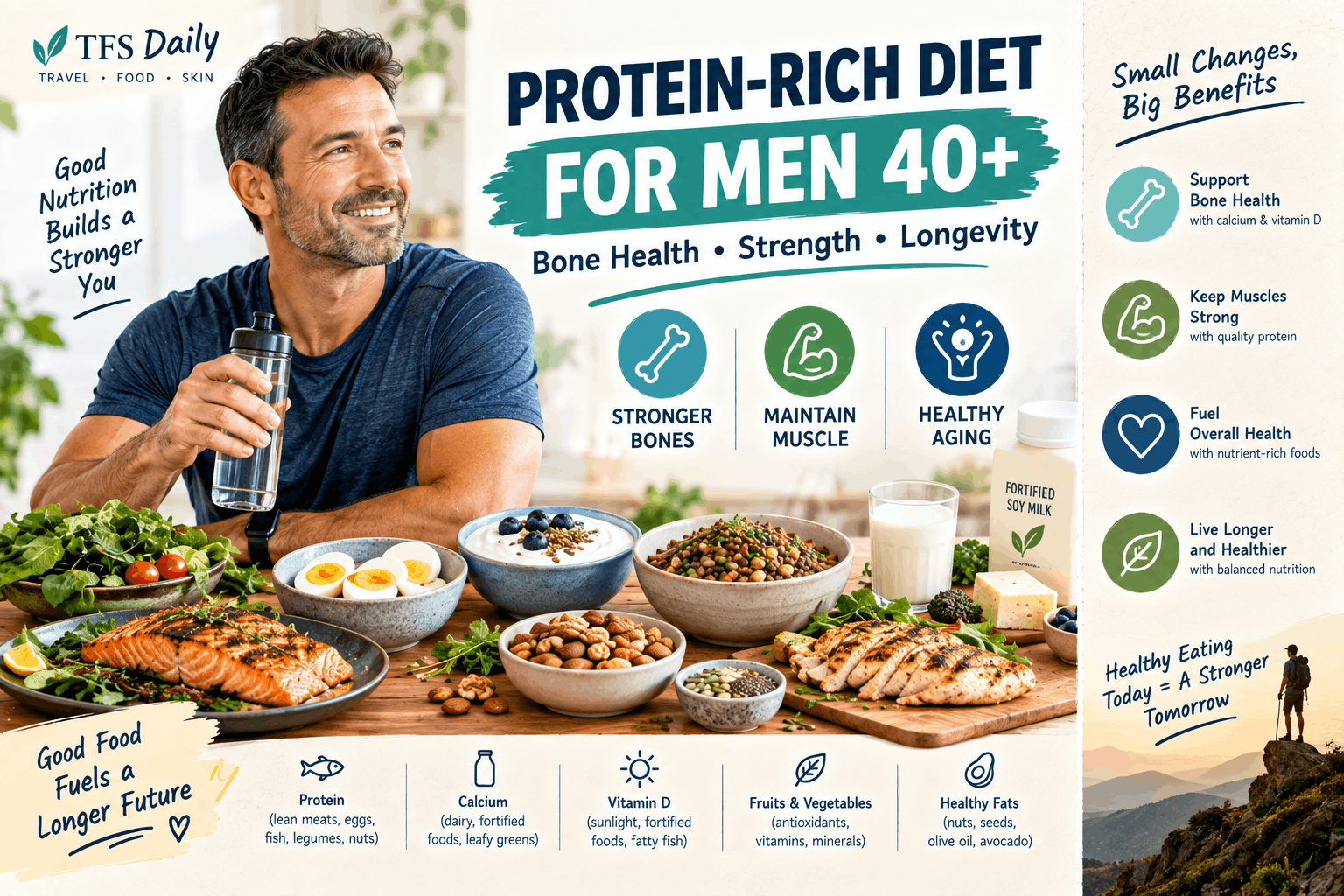
Choosing foods that deliver both high‑quality protein and bone‑friendly nutrients maximizes efficiency.
- Lean meats & fish: Chicken breast, turkey, lean beef, and fatty fish (salmon, mackerel) provide complete amino acid profiles and omega‑3 fatty acids that reduce inflammation and may improve calcium absorption.
- Dairy & fortified plant milks: Greek yogurt, low‑fat cheese, cow’s milk, and calcium‑fortified soy or oat milks deliver protein, calcium, and vitamin D in one package.
- Legumes & soy: Lentils, chickpeas, edamame, and tofu supply 15‑20 g protein per cup plus isoflavones that modestly support bone turnover.
- Nuts, seeds, & avocado: Almonds (6 g protein per ¼ cup), pumpkin seeds, and avocado add healthy fats that aid vitamin D activation and improve overall nutrient absorption.
Balancing animal and plant proteins also helps maintain a healthy fiber‑protein ratio, which is linked to better gut health and calcium utilization.
Meal Planning Blueprint: 7‑Day Sample Menu
Below is a practical, macro‑balanced week that delivers ~130 g protein per day for a 190‑lb man while hitting calcium (≥1000 mg) and vitamin D (≥800 IU) targets.
Day 1
- Breakfast: 3‑egg omelet with spinach, feta (20 g protein), 1 cup fortified soy milk (8 g protein, 300 mg calcium).
- Snack: Greek yogurt (15 g protein) with berries.
- Lunch: Grilled chicken breast (30 g) salad with quinoa, almonds, and olive oil dressing.
- Dinner: Baked salmon (35 g) with roasted broccoli and sweet potato.
Day 2‑7
Repeat the pattern, swapping protein sources (turkey, lean beef, tempeh, cottage cheese, lentil soup) and rotating vegetables to keep micronutrients diverse. Each day’s macro breakdown averages 25 % protein, 45 % carbs, 30 % fat.
Quick prep tip: Cook a bulk batch of quinoa, brown rice, and roasted vegetables on Sunday; portion into containers for fast assembly.
Shopping list (core staples): eggs, chicken breast, salmon, Greek yogurt, low‑fat cheese, fortified soy milk, quinoa, brown rice, mixed nuts, almond butter, leafy greens, cruciferous veg, berries, avocado, olive oil, calcium‑rich tofu.
Common Myths & Misconceptions
- Myth: Too much protein harms kidneys. In healthy adults, high protein (up to 2 g/kg) does not impair renal function. Risk appears only in pre‑existing kidney disease.
- Myth: Plant protein isn’t enough for bone health. While some plant proteins lack one essential amino acid, combining legumes with grains (e.g., rice‑and‑beans) creates a complete profile. Soy and pea proteins also contain calcium and isoflavones that support bone turnover.
- Myth: Supplements replace whole foods. Whole foods deliver synergistic nutrients—protein, calcium, vitamin D, magnesium—that isolated powders cannot fully replicate.
Supplement Considerations (If Needed)
Supplements should fill gaps, not become the foundation.
- Protein powders: Whey isolate (20‑25 g protein per scoop) is rapidly absorbed, ideal post‑workout. For vegans, pea‑rice blends provide comparable amino acid scores. Use recommended tool to track serving sizes.
- Calcium‑vitamin D combos: If blood 25‑OH vitamin D <20 ng/mL, a daily 1000‑2000 IU supplement plus 500‑600 mg calcium can prevent deficiency.
- Safety: Do not exceed 2 g/kg protein or 3000 mg calcium per day without medical supervision.
Lifestyle Factors That Amplify Results
Nutrition works best when paired with supportive habits.
- Weight‑bearing exercise: Squats, deadlifts, hiking, or brisk walking stimulate osteoblasts. Aim for 150 minutes of moderate‑intensity activity weekly.
- Sleep quality: 7‑9 hours of deep sleep promotes growth hormone release, essential for bone remodeling.
- Limit ultra‑processed foods: Excess sodium and phosphates in processed snacks can leach calcium from bone.
Monitoring Progress & When to Seek Professional Help
Track both dietary intake and physiological markers.
- Biomarkers: Serum calcium, 25‑OH vitamin D, and parathyroid hormone levels every 6‑12 months.
- Bone density scans (DXA) every 2‑3 years for men over 50 or earlier if risk factors exist.
- Red flags: Persistent bone pain, unexplained fractures, or a sudden drop in BMD indicate a need for medical evaluation.
Consult a registered dietitian for personalized macro distribution, and a physician for hormonal or medication considerations.
FAQ
How much protein is too much for bone health?
For healthy men, exceeding 2 g/kg rarely causes bone loss; however, extremely high intakes may displace calcium‑rich foods, indirectly affecting bone density.
Can I rely on protein bars alone?
Protein bars can supplement meals but often lack calcium and vitamin D. Pair them with a dairy or fortified plant‑milk source to keep the bone‑supportive nutrient balance.
Is whey better than casein for older men?
Whey digests quickly, making it ideal post‑exercise. Casein releases amino acids slowly, which can help maintain muscle protein synthesis overnight. Using both at different times maximizes benefits.
Conclusion
Men over 40 who prioritize a protein‑rich diet that includes calcium‑dense dairy, omega‑3‑laden fish, and diverse plant proteins can markedly improve bone mineral density, sustain muscle mass, and enjoy a higher quality of life. Pair these foods with regular weight‑bearing activity, adequate sleep, and periodic health monitoring, and you’ll build a resilient skeleton that supports longevity.