
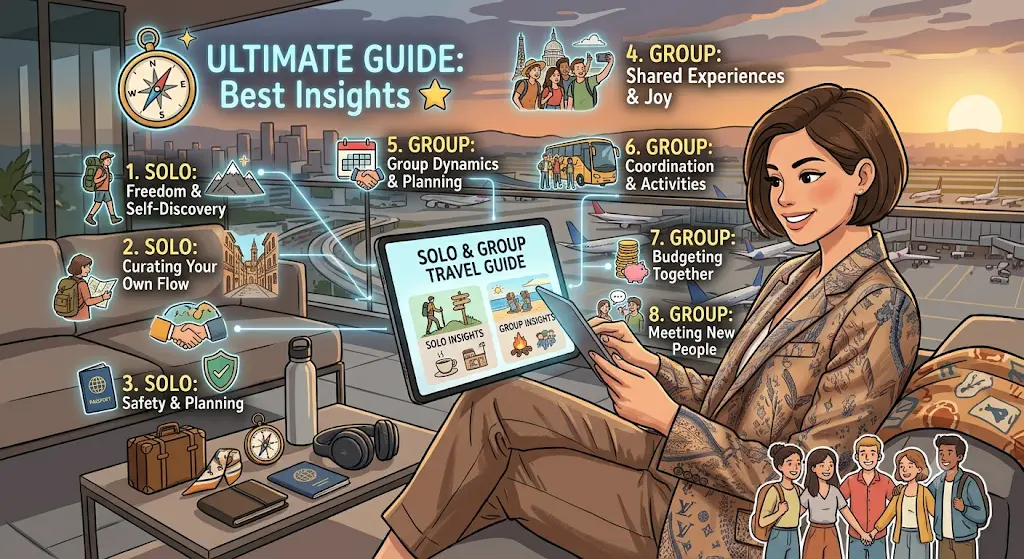
Twenty‑seven hours after a cramped plane ride, a woman with only a single backpack and a half‑filled itinerary steps off a Tokyo Narita gate, her passport stamped, her mind buzzing with the possibilities of the next three days. She is a solo traveler, yet she feels the thrill of an entire city waiting to be explored. Her experience is a microcosm of what hundreds of millions of travelers experience each year, whether they walk alone or in a group. The question is not whether to travel, but how to travel.
Understanding the Solo vs. Group Paradigm
Solo and group travel differ in scale, risk tolerance, and social dynamics. Solo journeys offer freedom to pivot at a moment’s notice, to linger in a café, to change a route without consulting anyone. Group trips, meanwhile, distribute responsibilities, share costs, and create a built‑in support network. Yet both share the same foundational elements: planning, budgeting, safety, and the ability to adapt.
Key Differentiators
- Decision Authority: Solo travelers decide alone; groups require consensus.
- Financial Structure: Solo budgets are personal; group budgets need pooling.
- Logistical Complexity: Solo itineraries can be linear; group itineraries often require parallel tracks.
- Social Interaction: Solo travelers must initiate connections; groups can rely on existing bonds.
Recognizing these distinctions allows travelers to apply the right tools at the right stage.
Pre‑Trip Planning: A Structured Framework
Before the first ticket is purchased, a traveler must map out a skeleton of the journey. A structured framework ensures no critical detail is overlooked.
Step 1: Define Your Purpose
Is the trip about adventure, relaxation, learning, or business? The purpose dictates the pace, the destinations, and the level of flexibility you need.
Step 2: Set a Realistic Budget
Calculate the total cost: airfare, accommodation, food, transport, activities, insurance, and a contingency buffer. For groups, divide the budget by the number of participants, but remember that some costs, like shared accommodations, scale sub‑linearly.
Step 3: Research Destination Risks
Consult CDC travel health guidelines and the US State Department travel advisories to understand health risks, local laws, and safety concerns. This step protects you from unforeseen complications.
Step 4: Build a Flexible Itinerary
Create a day‑by‑day schedule with optional activities. Leave buffer time for spontaneous events, an alley market in Kyoto, a late‑night karaoke session in Seoul, a sunset hike in Patagonia.
Step 5: Secure Travel Insurance
Insurance is non‑negotiable. Choose a policy covering medical evacuation, trip cancellation, and baggage loss. For groups, look for group policies that offer per‑person coverage at a discount.
Gear & Packing Mastery
What you carry defines your comfort. Packing efficiently reduces friction, especially when you’re on the move.
Solo Packing Essentials
- Lightweight, versatile clothing (roll, don’t fold).
- Multi‑purpose travel accessories: a collapsible water bottle, a travel towel, a universal charger.
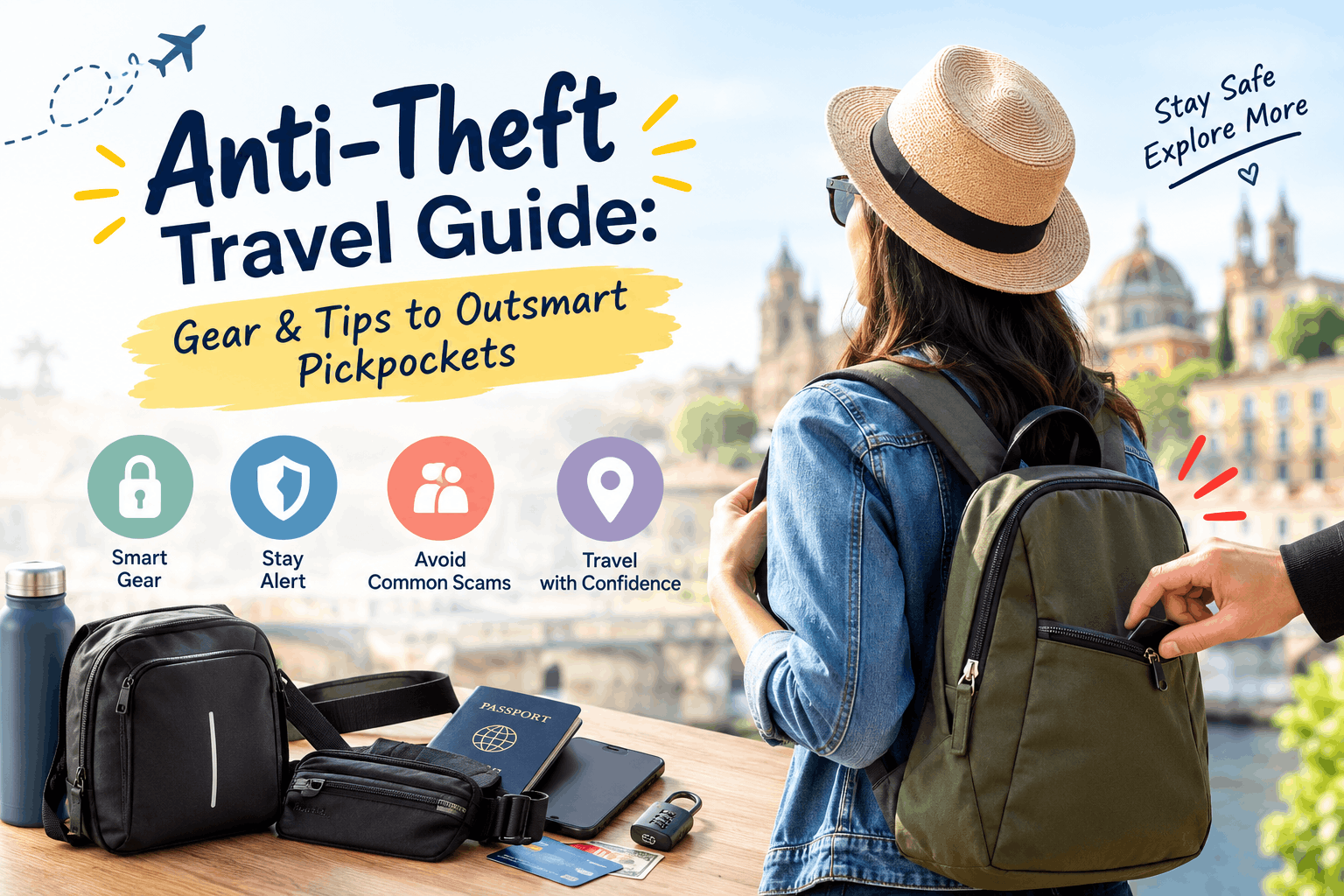
- Personal safety devices: a small lock, a whistle.
- Digital tools: a portable Wi‑Fi hotspot, a travel app with offline maps.
Group Packing Essentials
- Shared items: a high‑capacity power bank, a portable speaker, a first‑aid kit.
- Individual items: each traveler should bring a small daypack.
- Communication gear: a group messaging app with offline capabilities.
To keep your suitcase light, consider the travel accessories on Amazon India. They offer space‑saving solutions like compression bags and multi‑use organizers.
Packing Checklist
Below is a checklist that applies to both solo and group travelers. Tick it off before you close your suitcase.
| Category | Solo | Group |
|---|---|---|
| Clothing | 5, 7 items, layers | 5, 7 items per person, layers |
| Footwear | 1 pair of walking shoes, 1 pair of sandals | Same as solo, but coordinate for shared activities |
| Electronics | Phone, charger, power bank, adapter | Shared power bank, group charger, backup batteries |
| Health & Safety | Medications, travel insurance card, sanitizer | Medications, group first aid kit, sanitizer |
| Documentation | Passport, visas, travel insurance, itinerary | Same as solo, plus group contact list |
| Misc. | Travel journal, reusable water bottle | Reusable water bottles, group activity kit |
Transportation Tactics: From Sky to Street
Transportation is the lifeblood of any trip. Efficient movement saves time and money.
Flights
Use Aviasales for competitive airfare. For groups, negotiate a group rate or use a multi‑city ticket to reduce costs. Always compare direct flights with stopovers; sometimes a one‑stop flight can save up to 20%.
Trains
In Europe and Asia, trains often provide a more scenic and comfortable alternative to flights. For groups, look for rail passes that offer unlimited travel across multiple countries, EuroRail or Japan Rail Passes are examples.
Local Transport
Public transit is usually cheaper and more sustainable. Use apps like Citymapper or Moovit to plan routes. For groups, consider renting a van or booking a private shuttle if the itinerary is complex.
Ride‑Share & Car Rentals
Ride‑share services can be economical for short distances. Car rentals are ideal for remote areas but require careful budgeting for fuel and insurance. For groups, split the cost of a rental car and a fuel budget to maximize savings.
Accommodation Choices: Where to Rest Your Head
Accommodation shapes your travel experience. The choice between hostels, hotels, Airbnb, or house‑sitting can influence cost, comfort, and social interaction.
Hostels
Best for solo travelers who want to meet others. Look for hostels with organized events. For groups, book a private room or a block of rooms to ensure privacy.
Hotels
Ideal for travelers prioritizing comfort. Many hotels offer group discounts for extended stays.
Airbnb & Short‑Term Rentals
Provides a home‑like environment. For groups, a large house or apartment can be cost‑effective, especially when sharing kitchen facilities.
House‑Sitting
Free accommodation in exchange for caretaking duties. A great way to immerse yourself in a local community. Not ideal for large groups.
Comparison Table
| Accommodation Type | Cost (per night) | Social Interaction | Ideal Traveler |
|---|---|---|---|
| Hostel Dorm | $25, $50 | High, shared rooms, common areas | Solo, budget travelers |
| Hostel Private Room | $50, $80 | Moderate, shared kitchen | Solo, small groups |
| Hotel Standard | $100, $200 | Low, private rooms | Business, luxury seekers |
| Airbnb Apartment | $70, $150 | Variable, depends on host | Families, groups |
| House‑Sitting | $0 | High, community integration | Long stays, cultural immersion |
Social Dynamics: Building Connections on the Road
Travel is not just a series of sights; it’s an exchange of stories.
Meeting Locals
Engage in community events, cooking classes, or volunteer work. These activities offer authentic interactions that go beyond typical tourist experiences.
Connecting with Fellow Travelers
Use platforms like Meetup, Couchsurfing, or travel forums. For groups, a shared messaging app like WhatsApp or Telegram ensures everyone stays informed.
Digital Tools for Social Interaction
Apps such as Bumble BFF or Travel Buddies help you find companions with similar interests in real time.
Budget Management: Tracking & Optimization
Effective budgeting turns a trip into a stress‑free adventure.
Expense Tracking Apps
Tools like Trail Wallet or Splitwise allow you to log expenses instantly. For groups, these apps automatically split costs.
Cash vs. Card
Carry a small amount of local currency for immediate expenses. Use cards for larger purchases, but be mindful of foreign transaction fees.
Group Pooling
Create a shared fund for shared expenses (accommodation, transport). Use a group bank account or a prepaid travel card to avoid currency conversion headaches.
Health & Safety: Protocols & Precautions
Safety is non‑negotiable. A well‑prepared traveler can avoid many pitfalls.
Vaccinations & Medical Precautions
Consult a travel clinic at least 4, 6 weeks before departure. Keep a list of local emergency numbers.
Travel Insurance Nuances
Choose a policy that covers medical evacuation, trip interruption, and loss of personal property. For groups, look for a policy that covers each member individually.
Emergency Planning
- Share your itinerary with a trusted contact.
- Know the location of your country’s embassy.
- Carry a copy of important documents.
Post‑Trip: Reflection & Knowledge Sharing
The journey doesn’t end when you return home. Reflection solidifies learning and sharing amplifies impact.
Journaling
Write daily entries. Focus on experiences, feelings, and lessons learned. This practice enhances future travel planning.
Travel Blogs & Social Media
Document your trip on a blog or Instagram. Use this platform to share insights, photos, and practical tips with a wider audience.
Group Debrief
Gather with your travel companions to discuss what worked and what didn’t. Document this in a shared Google Doc for future reference.
FAQ
What is the best way to find affordable group travel deals?
Use dedicated group travel platforms like Aviasales for flight discounts, and look for hostel group rates or Airbnb bulk discounts. Booking early and staying flexible can yield the lowest prices.
How do I ensure safety while traveling solo?
Maintain a low profile, avoid isolated areas at night, keep valuables secured, and stay connected by sharing your location with a trusted contact.
Can I use the same itinerary for both solo and group travel?
While the core structure can be shared, group itineraries often require parallel tracks to accommodate varying interests and budgets.
What are the top apps for group expense splitting?
Splitwise and Trail Wallet are popular. Both offer real‑time expense tracking and automated splits.
How do I handle language barriers in foreign countries?
Learn basic phrases, use translation apps like Google Translate, and carry a phrasebook or QR code for instant communication.
Takeaways & Action Plan
Implementing these insights transforms travel from a chaotic experience into a deliberate, enriching adventure. Below is a concrete, step‑by‑step framework you can start using today:
- Define Purpose. Write down the primary goal of your trip on a sticky note.
- Set Budget. Use a spreadsheet to allocate funds: flights, accommodation, food, activities, insurance, contingency.
- Research Risks. Bookmark CDC and State Department pages for the destination.
- Build Itinerary. Draft a day‑by‑day plan with optional activities.
- Secure Insurance. Compare two providers and choose the one that covers all your needs.
- Pack Strategically. Follow the checklist; use compression bags.
- Book Transport. Use Aviasales for flights; compare train passes; plan local transit.
- Reserve Accommodation. Choose a type that matches your budget and social preference.
- Download Apps. Install Trail Wallet, Splitwise, and a reliable map app.
- Plan Social Engagement. Sign up for local events or meet‑ups a week before departure.
- Set Emergency Protocol. Share itinerary; have a backup contact list.
- Travel & Explore. Stay present; adapt as needed.
- Reflect & Share. Journal daily; post highlights; debrief with your group.
By following these steps, you equip yourself with the tools, knowledge, and confidence to navigate any solo or group adventure. The world is vast; your next trip is only a decision away.
One thought on “Guide to Solo & Group Travel: Best Insights”
Comments are closed.